News Trading Rules at Prop Firms: What You Can and Can't Do
October 19, 2026

March 4, 2026
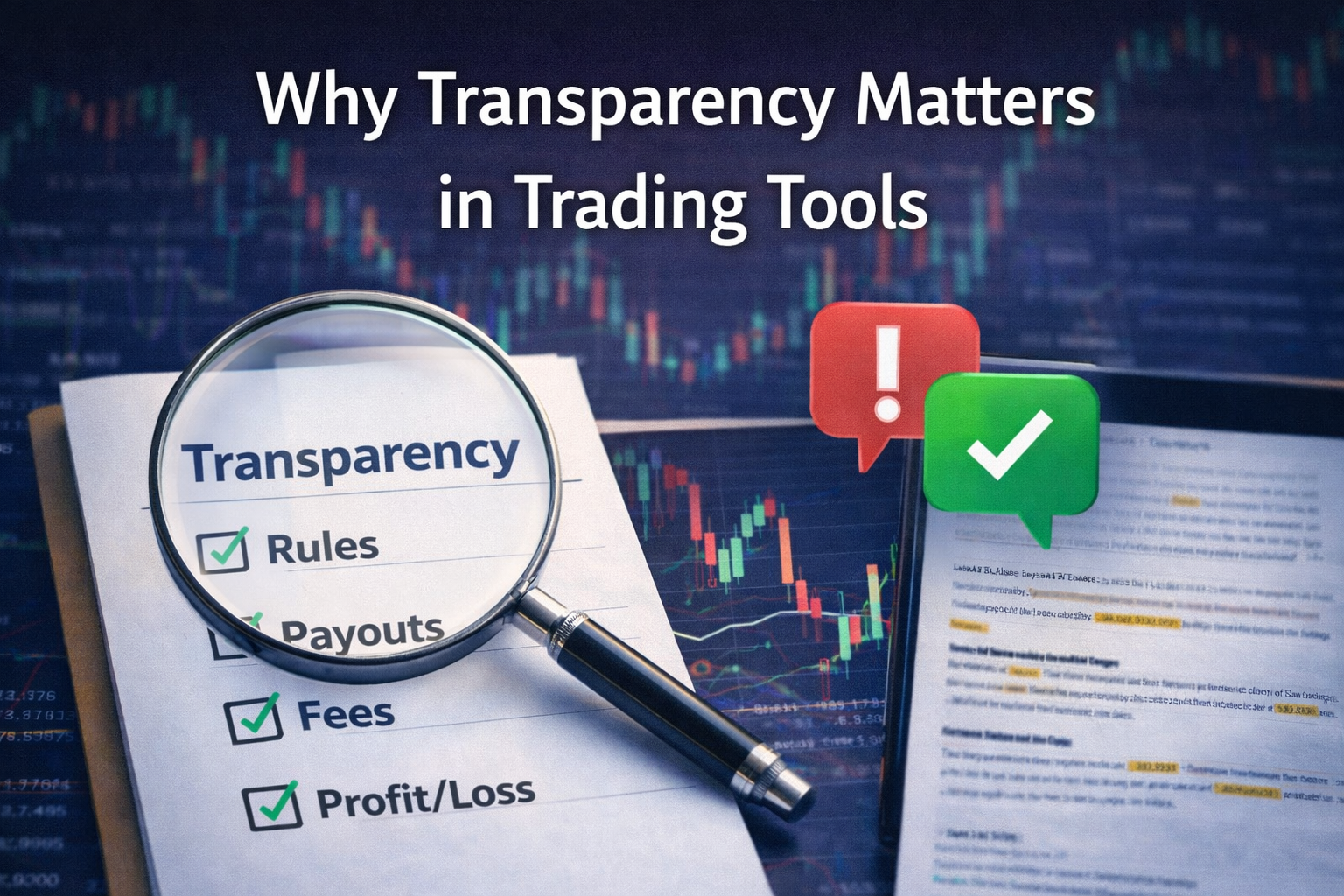
In the retail trading industry, information is not just power—it is your bankroll.
Yet, this industry is notoriously opaque. A 2024 industry survey suggested that over 70% of retail trading tools (indicators, bots, and signal services) do not perform as advertised in live market conditions.
Why? Because selling the dream of trading is often more profitable than trading itself.
At TraderNotion, our entire mission is built on the belief that transparency isn't a "nice to have"—it is the only metric that matters. Whether you are choosing a broker, buying an indicator, or joining a prop firm, understanding what is happening behind the curtain is the difference between a calculated risk and a guaranteed loss.
Here is the truth about transparency in trading tools, and how to protect yourself from the "black box" economy.
The most critical tool you use is your broker. But do you know who is on the other side of your trade?
The Transparency Gap:Many brokers claim to be ECN but covertly run a "Hybrid Model," moving profitable traders to the A-Book and keeping losing traders on the B-Book to pocket their losses.
The Trader’s Takeaway:Always check if your broker/prop firm allows "Tick Data" analysis. If they hide their execution speeds or slippage data, assume you are on a B-Book.
You’ve seen the ads: A chart with perfect "Buy" and "Sell" arrows catching every top and bottom. It looks like a money printer.
This is usually a lie called "Repainting."
A repainting indicator changes its historical signals based on future data.
The Result: When you look at the chart history, it looks perfect because all the losing signals were deleted. But in live trading, you would have been stopped out three times.
How to Test for It:Never buy an indicator without a Strategy Tester Report (backtest) that explicitly runs in "Every Tick" mode. If the vendor refuses to show live, forward-tested results, run away.
As we discussed in our [Prop Firm Evaluation Guide], most prop firms operate on simulated feeds. This lack of transparency can lead to a false sense of skill.
The Slippage Illusion:On a simulated feed, you get filled instantly at the price you clicked. In the real market, attempting to trade 50 Lots during a news event would result in massive slippage (getting filled at a worse price).
In the age of social media, a screenshot of a MetaTrader 4 profit screen is meaningless.
The "Demo" Trick:Unscrupulous educators often create two demo accounts. They take a LONG position on Account A and a SHORT position on Account B.
The Transparency Standard:Demand Third-Party Verification.
Transparency is uncomfortable. It forces vendors to admit their tools aren't perfect. It forces educators to show their losing months. And it forces brokers to admit they profit when you fail.
But as a trader, you are a risk manager. You cannot manage risk if the data you are feeding into your decision engine is fake.
The TraderNotion Promise:We pledge to only review tools that offer verifiable data. If a product hides its logic, repaints its signals, or refuses third-party auditing, it does not belong in your toolkit—and it won't be on our site.
Ready to find the right tools? Visit TraderNotion to find the next one









.jpeg)