Excel vs Trading Journal Software: When to Upgrade (And When Not To)
October 16, 2026

February 27, 2026
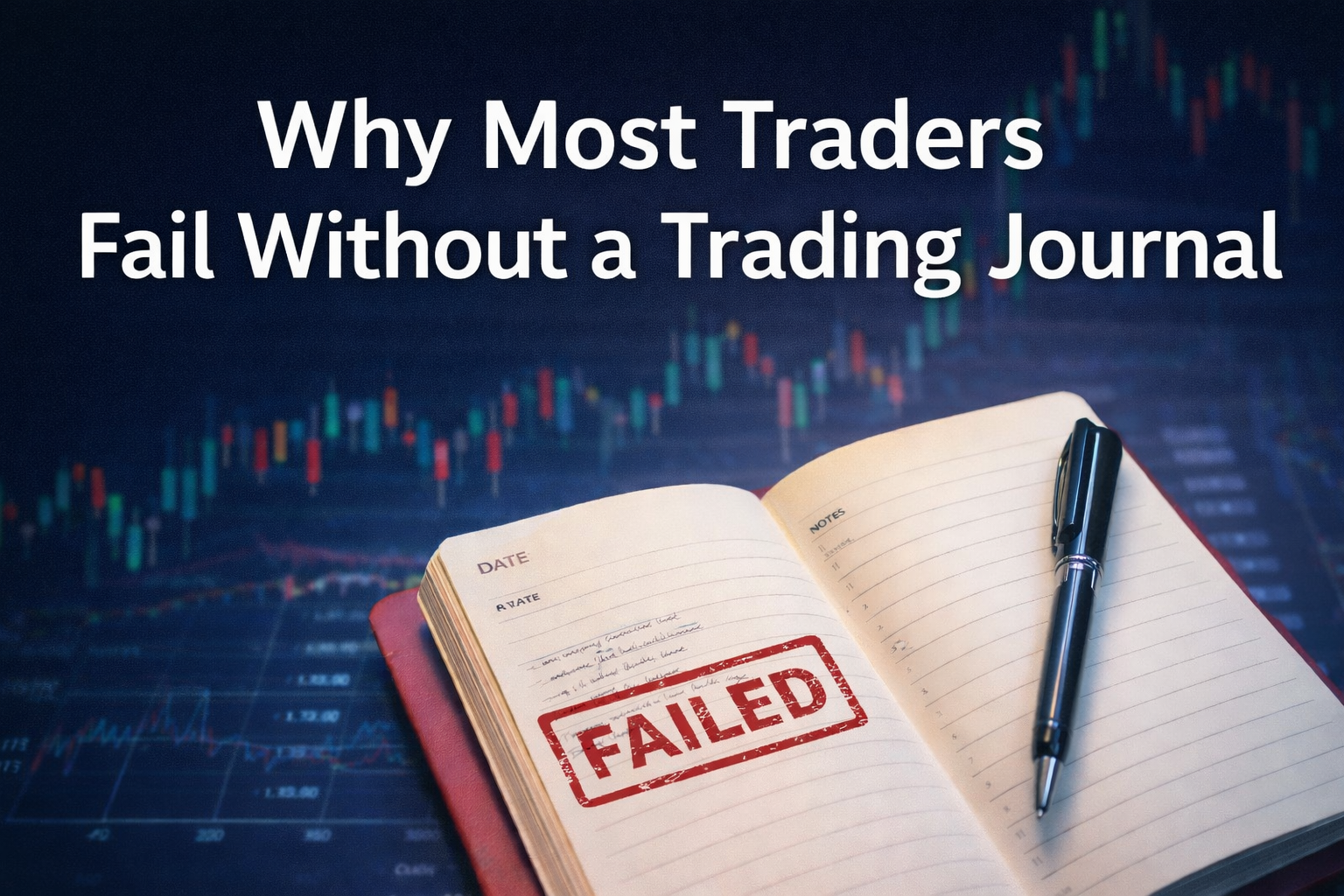
There is a famous, albeit unofficial, statistic in the retail forex and futures industry known as the 90/90/90 rule: 90% of new traders will lose 90% of their capital within their first 90 days.
Why is the failure rate so staggering? It isn't because the markets are "rigged" against the little guy, and it isn't because retail traders lack access to institutional indicators.
The primary reason traders fail is a catastrophic lack of self-awareness. Without a trading journal, you are relying purely on memory and emotion—two things heavily distorted by the stress of financial risk. In this breakdown, we explore exactly why attempting to trade without a comprehensive journal is a mathematical and psychological death sentence for your portfolio.
To understand why traders fail without a journal, you have to look at how unjournaled traders behave when they hit a losing streak.
Without concrete data to review, traders fall victim to Strategy Hopping. This creates a toxic loop often referred to as the "Cycle of Doom."
When you don't journal your trades, you have no way to verify if a losing streak is just normal statistical variance (a standard drawdown) or if your strategy is actually broken.
The Trader’s Takeaway: If you don’t track your setups, every losing streak feels like a broken strategy. A journal gives you the historical data to say, "I've seen this setup fail three times in a row before, but over 100 trades, it still yields a 15% return." Data kills panic.
Operating without a journal creates three massive blind spots that slowly drain your account margin.
Human memory is notoriously flawed, especially when money and ego are involved. We naturally highlight our brilliant winning trades and suppress our embarrassing, rule-breaking losses.
Without a written log, a trader might think they have a 60% win rate because they remember their big wins. If forced to look at a journal, they would realize their actual win rate is 35%, and their account is only surviving because of luck.
Professional poker players and professional traders share a common enemy: "Tilt." Tilt happens when frustration or anger dictates your next move, leading to revenge trading or over-leveraging.
If psychology is your biggest leak, a tool like Edgewonk is built specifically to analyze discipline and behavior, not just P&L.
If you aren't logging your emotional state before and after every trade, you cannot identify your triggers. You might consistently blow accounts on Fridays after a bad week, but without a journal, you'll just blame the Friday market volatility instead of your own lack of emotional regulation.
You cannot improve what you do not measure. A serious trader measures success in R-Multiples (Risk vs. Reward), not just dollars.
If you risk $100 to make $300, that is a 3R trade. Without a journal, you cannot calculate your system's True Expectancy.
A proper trading journal forces you to act like a risk manager rather than a gambler. Here is how it actively repairs a failing trader:
Think of a trading journal as the administrative cost of running a successful trading business. It isn't always fun to fill out, and logging your worst losses can bruise your ego. But ignoring your data is the fastest way to join the 90% of traders who wash out.
Stop looking for a better entry signal. Start looking at your own execution.
Ready to get your data in check? Find the trading journal that fits your trading style. Read our reviews on [The best Trading Journals] and take control of your edge today.









.jpeg)